March 15, 2024
Getting Started with Your Marketplace
Learn the essential steps to launch and grow your online marketplace successfully.
Discover insights, tips, and stories from our community
Learn the essential steps to launch and grow your online marketplace successfully.

Tips and strategies to help sellers maximize their success on the platform.
A deep dive into how modern marketplaces work and what makes them successful.
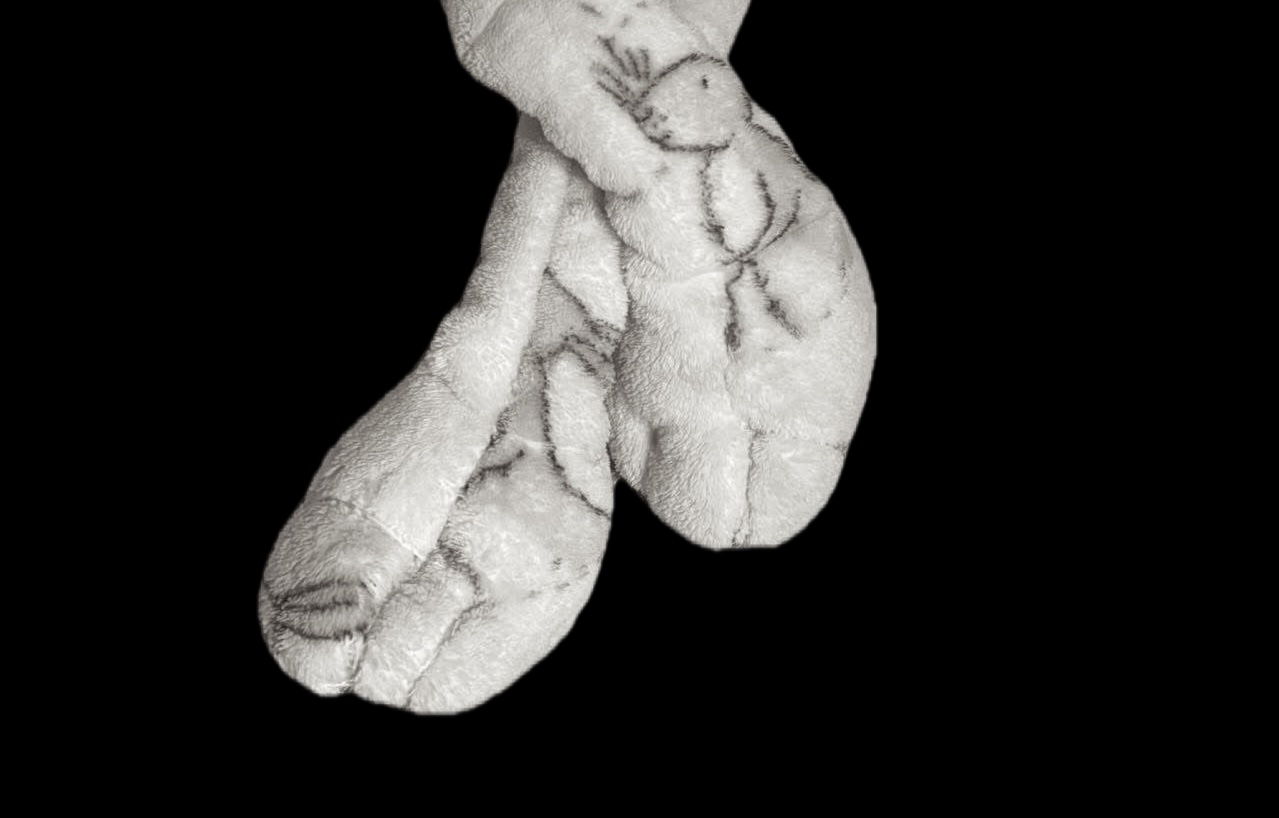
From scraps to loved - a MYALL Atelier remnant project
I love the story of the Velveteen Rabbit. "You become. It takes a long time…Generally, by the time you are Real, most of your hair has been loved off, and your eyes drop out and you get loose in your joints and very shabby. But these things don't matter at all, because once you are Real you can't be ugly, except to people who don't understand.” (The Velveteen Rabbit, by Margery Williams (1921)).
Some pieces of clothing, blankets, cushions or tablecloths are like that… loved to threads, but real. It makes your heart sing, or smile, or beat a bit warmer at the touch of those loved pieces. We won’t talk about them today, because they have a welcome spot in our homes and hearts.
But we need to talk about the textiles that will never become Velveteen Rabbit real.
It sounds like such a big job to consider the textiles currently not being used in our homes, and plan for their future use. But really, you can do this one item at a time. Next time you open that drawer where they hide, just think, great space, but do I really want to keep this in here? If so, why? If not, what will happen to it? Use or Move?
Use:
Use as is: Use the good bed and table linen. You bought it because you loved it. The rainy day you saved it for, is now. The honoured guest, is you. Enjoy the privilege of using that special item you traded your income for. Wear the silk monogrammed nighties, they may outlast you even if you wear them!
Upcycle: “I love this, but it is no longer pretty/trendy”. What can you do to fix the “not pretty” bits? Dye it? Print or paint on it? Applique? Creative embroidery? Cut it down and create something else, e.g. cushions or kitchen towels from linen tablecloths? Potpourri bags for your clothing drawers? A top or a skirt? Christmas decorations? Ask a friend. Post the question in our forums and see what solutions jump out. Don’t give up, try something.
Move:
Donate: Charities in Australia need really good quality items to fund their community focussed projects. If sub-standard items are donated, it does not help charities, but adds to their cost burden. We also need to keep in mind that due to cheap online prices and short life expectancy of fastfashion items, there is very little incentive for anyone to buy such clothing from charities. This is an important consideration, as charities may end up having to dump clothing, even new clothing, that remain unsold. So it does not make much economic sense. If this trend continues, it will eventually affect the shops' turnover, which in turn would significantly impact their ability to support those in dire need. So we need to ask ourselves before we donate, whether someone will really use it, or is there a chance that it may end up in landfill locally or overseas. How can we actively prevent this? Would upcycling value add to the item and assist the charity?
Sell: Selling pre-loved, or leftover textiles may help someone else complete their project, and can simultaneously fund your purchase of textiles you really need, like a winter coat, or a new bikini. You all need to pray that I don’t swap my one piece for the latter, as whomever is on the beach when I jiggle down to the water’s edge, will need to wear protection for arc-eye!
When your textile is in too poor a condition to sell, or a type of item that cannot be sold, e.g. underwear or bedding, you would do best to consider the type of textile. (Read here about the burn test to determine fibre type when your textile item has no label.) If it is a 100% natural fibre, it is admittedly desirable for fibre to fibre recycling. Unfortunately, less than 1% of textiles are being recycled this way, and yes, most of it is 100% natural fibre. Due to a lack of investment in textile recycling infrastructure, there may not be a facility near you that would make the footprint of recycling more environmentally friendly than cutting your textile into small pieces and adding it directly to your home compost bin. There it will deteriorate with the organic waste from your kitchen and garden. You may wonder why your home compost is better than landfill. For starters, no one else will have to handle your textile. You are not passing on costs or an increased environmental footprint, because you have eliminated the need for waste collection, driving to a depot, and potential export to a third party country. Processing it this way means the fibre is being processed as part of the natural carbon cycle, where the organic matter will feed soil microbes, and eventually your plants.
But what if it is not 100% natural fibre? This is the big question as infrastructure investment to develop circularity, especially fibre to fibre recycling, is globally inadequate. Over 60% of textiles contains polyester, and our recycled bottles mainly ends up as spun polyester. So sadly, blended or 100% polyester fabrics are fast tracking microplastic into the environment. We must not underestimate the severity of this issue. One garbage truck full of textile is dumped or incinerated every second! And poised to increase yearly.
Where possible, try to prolong the item's use. Weave a bathroom mat, make hair scrunchies, or shoe bags. After that, try to find a textile recycling business near you to support. Organisations like Upparel in VIC, are making headway by recycling textiles into new fibres. You may be required to pay to have your items recycled, to help keep the process sustainable. Failing that, we know where it will go. At least you tried, and that is the best you can do. #noguilt #justtry
If we build a community to make better use of our resources, we can make a difference. If this resonates with you, please help spread the word by sharing our marketplace, blogs, or posts.
We love learning from others to gain insights from their experiences. Everyone is welcome to share ideas that contribute to innovative thinking, circularity, or deflecting surplus textile from landfill.

Building a successful marketplace requires understanding the complex dynamics between buyers, sellers, and the platform itself. In this comprehensive guide, we'll explore the key factors that make modern marketplaces thrive.
This morning, I read a comment on a post where someone called out the term “pre-loved”, as a “sneaky way” of getting around the fact that something is second hand. And for something to be second hand, someone had to buy it new, and therefore both have a valid place. Solid argument. After all, garment industry workers need their jobs too.
Quality slow fashion is not the problem if resources are extracted sustainably, materials manufactured with care, and people paid fairly along the supply chain. It is an issue when brands start cutting corners with poorer quality textile, or less transparency about the sourcing and manufacturing processes. And it is easy to understand why they occasionally would do this. The competition is stiff. China exports $260 billion worth of textiles per year, followed by Bangladesh with $48 billion. Australia, as the world’s second highest textile consuming country, is a prime target for these garments.
Most of the 100% European flax (a tiny fraction of global textile production) and cotton/linen blends are now milled in China. This includes almost all the linen I source as stock buys from Australian or European suppliers.
I take care to choose wholesalers that import Oeko-tex certified textiles with transparent supply chains covering resource extraction (such as the “BCI”, better cotton initiative), manufacturing and fair pay. These mills are checked annually to retain their certification.
But then there is fast fashion…
Last year several mature ladies’ clothing chain stores in Australia closed. It upset many consumers. Yet, policy makers hardly noticed. It was just natural market forces of supply and demand, right? Hidden from sight, are the many smaller manufacturers, generational businesses, all over Australia, but especially noticeable in Brisbane and Melbourne, closing. Top quality textiles retailing for $160/m have been donated to charities, and are selling for as little as $15/m. I stumbled across such textiles and that was how I became aware of what is going on.
These small businesses can’t compete with fast fashion prices. Buyers expect fabrics and craftsmanship of superior quality to match prices of low-end products. It is not realistic. And our Aussie mum and dad businesses are paying the price for this. But hey, problem solved, importers just dump more fast fashion in other low end department stores, while reporters grumble about the increasing “casualisation” of Australian fashion. Well mates, this is what cheap and cheerful looks like. Overwhelmed charities, overflowing landfill as the waste problem gets passed down stream like the proverbial hot potato.
In June, a textile show was hosted in Sydney for overseas manufacturers and exporters that want to “take their businesses global” to connect with Australian Brands and importers. Potentially more junk we don’t need. It should have been the other way round - a show of our designers and manufacturers to connect with the rest of the world!
While we blame market forces, France took a stand and redrafted policies to limit imports and the dumping of new clothes. The rest of Europe hopped on board, but Australia still lags.
Yesterday I read about an initiative by RM Williams to revive fashion production in Australia. Great. The only problem is, this solution ignores that only very few can afford such expensive “sustainably” manufactured brands. Brands that still attract high prices second hand. So how can people with good intentions and limited means also make sustainable purchasing decisions? How do the rest of us close our intention/behaviour gap? Thrifting is one way.
Undeniably, the big issue is fast fashion. Exploitation is rife, some textiles toxic (hence the need for Oeko-Tex 100 certification), and garment construction is of poor quality. Once it lands in the Opshop, the problem compounds. Just because it is second hand, does not make it greener. Its sourcing and manufacturing were questionable and now there are issues to recycle and upcycle these garments. Investment in circularity is low globally, as is investment in Australian textile to textile recycling. I would have loved to see RM Williams invest in that instead. But it is not sexy and well, definitely not as profitable..
Up to 40% of all new garments are not even worn before it is donated to Opshops. Can such garments really carry the tag “pre-loved”? Falling apart, poorly made, garments aren’t pre-loved.
Opshops, and thus the charities relying on the income they generate, are going to face a difficult future if donations are predominantly fast fashion. Second hand prices can't exceed new prices and quite often new garments are dirt cheap. The reality is that Opshops need the best quality goods to make the most of their rented floor space. Despite a volunteer workforce, their overheads are significant. They still must pay rent and utilities. Add to it card payments, and there is a money grab before there is even a response to the question of whether these business models are still viable. For example, the fees of tech companies are accepted as the cost of doing business, but sometimes you must wonder how much is too much when the costs of a transaction may gobble up all the profits of a low value item. For example, Charity opshops are paying the same fees as any other online merchant. It means they are charged an annual hosting fee, plus a set fee (roughly 35c) per transaction or worse, per initiated transaction, and card processing fees by payment gateway providers. Card payment processing can vary from 1.9 to 3.9% depending on the type of card. Most Australian cards fall in the 2.2-2.5% category. And please don’t forget those convenient "buy now, pay later" providers with fees exceeding a whopping 6% on top of all the other fees. Based on this, it is easy to see why mum and dad business fail, and it is hard to fathom how low prices can be sustainable for charities.
Marketplaces benefit from powerful network effects. As more sellers join, the platform becomes more attractive to buyers, which in turn attracts more sellers. This creates a virtuous cycle that can lead to rapid growth.
"The best marketplaces create value for both sides of the transaction, making it easier and more efficient than traditional alternatives."
To build a thriving marketplace, focus on these critical metrics:
Successful marketplaces think beyond short-term growth. They invest in community building, continuous improvement, and creating sustainable value for all participants.
By focusing on these fundamentals, you can build a marketplace that stands the test of time and creates lasting value for your community.